logo
사건

Seagate FireCuda 540 Gen5 SSD Review

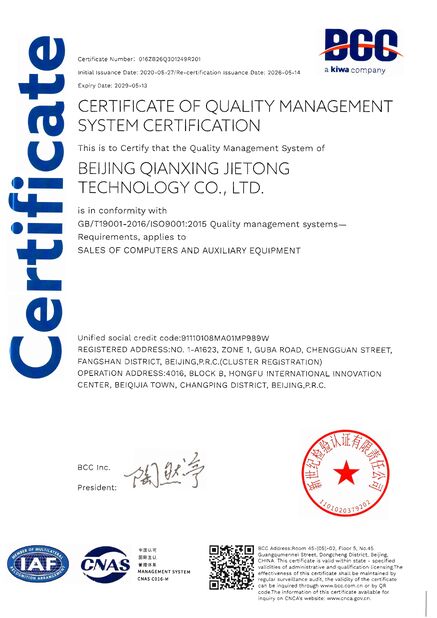
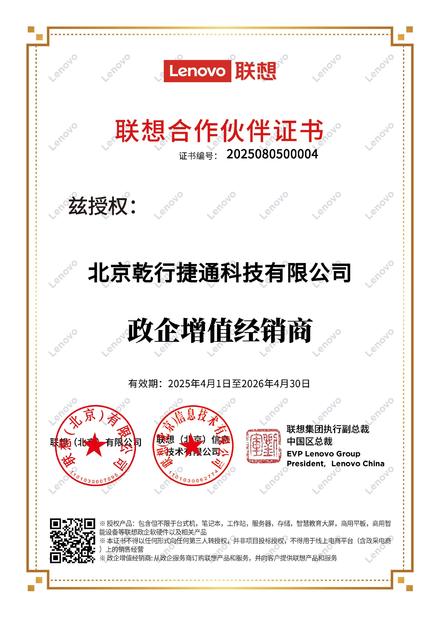
인증
중국 Beijing Qianxing Jietong Technology Co., Ltd. 인증
고객 검토
베이징 첸싱 지에통 테크 주식회사의 영업 사원은 매우 전문적이고 참을성 있습니다. 그들은 빨리 인용을 제공할 수 있습니다. 제품의 품질과 패키징은 또한 매우 좋습니다. 우리의 협력은 매우 매끄럽습니다.

—— 《Festfing DV》LLC

내가 긴급히 인텔 CPU와 토시바 SSD를 찾고 있었늘 때, 베이징 첸싱 지에통 기술 주식회사로부터의 샌디는 나에게 많은 도움을 주었고, 나에게 빨리 필요로 한 제품을 가져다 주었습니다. 나는 정말로 그녀를 압니다.

—— 고양이 엔

베이징 첸싱 지에통 기술 주식회사의 샌디는 내가 서버를 구입할 때 제시간에 나에게 구성 오류를 상기시킬 수 있는 매우 주의깊은 판매원을 있습니다. 엔지니어들은 또한 매우 전문적이고, 빠르게 테스팅 프로세스를 완료할 수 있습니다.

—— 스트렐킨 미하일 블라드미로비치

베이징 첸싱지에통과의 협업에 매우 만족합니다. 제품 품질이 훌륭하고, 배송도 항상 제 시간에 이루어집니다. 영업팀은 전문적이고, 인내심이 많으며, 모든 질문에 매우 친절하게 답변해 줍니다. 그들의 지원에 진심으로 감사드리며, 장기적인 파트너십을 기대합니다. 강력 추천합니다!

—— Ahmad Navid

품질: 제 공급업체와의 좋은 경험. 미크로틱 RB3011은 이미 사용되었지만 매우 좋은 상태로 모든 것이 완벽하게 작동합니다. 통신은 빠르고 원활했습니다.그리고 제 모든 걱정은 빠르게 해결되었습니다.매우 신뢰할 수 있는 공급자

—— 제란 콜레시오

제가 지금 온라인 채팅 해요

Seagate FireCuda 540 Gen5 SSD Review

March 12, 2026
The Seagate FireCuda 540 marks the newest addition to the company’s premium consumer drive lineup and stands as their first PCIe Gen5 NVMe SSD to launch on the market. Tailored specifically to meet the demands of gamers, content creators, and tech enthusiasts, this drive delivers the performance and speed boosts that come with the next-generation interface.
 
Seagate has integrated the latest 3D TLC NAND technology and paired it with their Seagate-validated E26 controller. This drive serves as the direct successor to the highly competitive FireCuda 530—a model that consistently ranked among the top performers in our benchmark tests. As such, we have high expectations for the FireCuda 540 to maintain this strong performance legacy.
최신 회사 사례 Seagate FireCuda 540 Gen5 SSD Review  0
Seagate FireCuda 540 Gen5 SSD
The FireCuda 540 distinguishes itself with its adoption of STX firmware, similar to the Gigabyte Aorus 10000. This firmware offers notable benefits, including built-in security features that prevent tampering and counterfeiting. However, the drive’s performance is slightly limited by its use of Micron NAND. While Micron has developed faster NAND options, their availability in large volumes remains restricted at present.
최신 회사 사례 Seagate FireCuda 540 Gen5 SSD Review  1
Seagate FireCuda 540 Gen5 SSD E26 Phison
That said, future iterations of this controller lineup will likely leverage the faster NAND, potentially delivering speeds that are at least 2,000 MB/s higher. These updated models might even come close to the 14GB/s theoretical limit of the Gen5 interface.
 
Seagate FireCuda 540 Features
Even so, Seagate quotes impressive sequential read and write speeds of up to 10,000MB/s for the 2TB FireCuda 540 model. Meanwhile, its random performance is expected to reach upwards of 1,480,000 IOPS for reads and 1,500,000 IOPS for writes—making it by far Seagate’s fastest and most high-performing M.2 2280 SSD to date. Additionally, the 2TB variant is built to handle heavy usage, boasting a mean time between failures (MTBF) of 1.8 million hours and a TBW (Terabytes Written) rating of up to 2,000TB.
 
Beyond its drive management software, the FireCuda 540 sets itself apart from competitors with the “3 Rescue” plan—a feature from Seagate’s comprehensive Rescue Data Recovery Service, designed to help customers recover data from a failed or damaged Seagate hard drive.
최신 회사 사례 Seagate FireCuda 540 Gen5 SSD Review  2
Seagate FireCuda 540 2TB
The “3 Rescue” plan provides three years of data recovery support, offering professional assistance to retrieve lost or inaccessible data from the drive. This is an optional add-on service that customers can choose when purchasing a Seagate drive, providing extra peace of mind for inevitable data loss incidents. Many smaller vendors that also utilize the Phison E26 controller do not offer such value-added services.
 
The FireCuda 540 is now available for purchase, with pricing set at $179.99 for the 1TB model and $299.99 for the 2TB variant. For this review, we will focus on the 2TB model to evaluate its real-world performance and features.
 

Seagate FireCuda 540 Specifications

  2TB 1TB
Standard Model ZP2000GM30004 ZP1000GM30004
Interface PCIe Gen5 ×4 NVMe 2.0 PCIe Gen5 ×4 NVMe 2.0
NAND Flash Memory 3D TLC 3D TLC
Form Factor M.2 2280-D2 M.2 2280-D2
Performance
Sequential Read (Max, MB/s), 1MB 10,000 9,500
Sequential Write (Max, MB/s), 1MB 10,000 8,500
Random Read (Max, IOPS), 4KB QD32 T8 1,490,000 1,300,000
Random Write (Max, IOPS), 4KB QD32 T8 1,500,000 1,500,000
Endurance/Reliability
Total Bytes Written (TB) 2,000 1,000
Mean Time Between Failures (MTBF, hours) 1,800,000 hrs 1,800,000 hrs
Rescue Data Recovery Services (years) 3 3
Warranty, Limited (years) 5 5
Power Management
Active Power, Average (W) 11 10
Idle Power PS3, Average (mW) 144 144
Environmental
Temperature, Operating Internal (°C) 0°C – 70°C 0°C – 70°C
Temperature, Nonoperating (°C) -40°C – 85°C -40°C – 85°C
Shock, Nonoperating: 0.5ms (Gs) 1500Gs 1500Gs
Special Features
TRIM Yes Yes
S.M.A.R.T. Yes Yes
SED TCG Opal 2.01 Yes Yes
RoHS Compliance Yes Yes
Physical
Length (mm/in, max) 80.15mm/3.155in 80.15mm/3.155in
Width (mm/in, max) 22.15mm/0.872in 22.15mm/0.872in
Height (mm/in, max) 3.58mm/0.140in 3.58mm/0.140in
Weight (g/lb) 7.4g/0.016lb 7.4g/0.016lb

Seagate FireCuda 540 Performance

For this review, we’re testing the 2TB Seagate Firecuda 540. Alongside it as comparables are a mixture of popular Gen4 SSDs, along with the first wave of Gen5 SSDs. Incidentally, all of the Gen5 are the same Phison E26 platform as the Firecuda 540.

For testing, we use two platforms. One is our consumer test platform that supports PCIe Gen4/Gen5 SSDs, which is sometimes leveraged for lighter consumer-based tests such as BlackMagic DiskSpeed Test and CrystalDiskMark. Our main platform, though, which overlaps with our enterprise tests, is a Dell PowerEdge R760. For ultimate flexibility, we worked with Serial Cables, who supplied us with an 8-bay PCIe Gen5 JBOF for U.2/U.3, M.2, and E1.S/E3.S drive testing. This allows us to test all current and emerging drive types on the same test hardware.

Dell PowerEdge R760 Configuration

  • Dual Intel Xeon Gold 6430 (32 cores/64 threads, 1.9GHz base)
  • 1TB DDR5 RAM
  • Ubuntu 22.04

VDBench Workload Analysis

When benchmarking storage devices, application testing is best, and synthetic testing is second. While not a perfect representation of actual workloads, synthetic tests help baseline storage devices with a repeatability factor that makes it easy to compare competing solutions. These workloads offer a range of testing profiles ranging from “four corners” tests, common database transfer size tests, to trace captures from different VDI environments.

These tests leverage the common vdBench workload generator, with a scripting engine to automate and capture results over a large compute testing cluster. This allows us to repeat the same workloads across various storage devices, including flash arrays and individual storage devices. Our testing process for these benchmarks fills the entire drive surface with data, then partitions a drive section equal to 1% of the drive capacity to simulate how the drive might respond to application workloads. This is different from full entropy tests, which use 100% of the drive and take them into a steady state. As a result, these figures will reflect higher-sustained write speeds.

For testing, we use two platforms. One is our consumer test platform that supports PCIe Gen4/Gen5 SSDs, which is sometimes leveraged for lighter consumer-based tests such as BlackMagic DiskSpeed Test and CrystalDiskMark. Our main platform, though, which overlaps with our enterprise tests, is a Dell PowerEdge R760. For ultimate flexibility, we worked with Serial Cables, who supplied us with an 8-bay PCIe Gen5 JBOF for U.2/U.3, M.2, and E1.S/E3.S drive testing. This allows us to test all current and emerging drive types on the same test hardware.

Dell PowerEdge R760 Configuration

  • Dual Intel Xeon Gold 6430 (32 cores/64 threads, 1.9GHz base)
  • 1TB DDR5 RAM
  • Ubuntu 22.04

Profiles:

  • 4K Random Read: 100% Read, 128 threads, 0-120% iorate
  • 4K Random Write: 100% Write, 64 threads, 0-120% iorate
  • 64K Sequential Read: 100% Read, 16 threads, 0-120% iorate
  • 64K Sequential Write: 100% Write, 8 threads, 0-120% iorate
  • VDI Profiles

Starting with 4K random read, the FireCuda 540 Gen5 SSD showed top results, posting a peak of 989K IOPS at 128.6µs in latency trailing just the Solidigm P44 Pro (Of note, this is a Gen4 drive).

최신 회사 사례 Seagate FireCuda 540 Gen5 SSD Review  3

The FireCuda 540 didn’t fare well in 4K random writes, however. Here, it ended the test third to last with just 251K IOPS with a latency of 98.7µs. In comparison, the top-performing Samsung 990 Pro 2TB peaked at 573K IOPS.

최신 회사 사례 Seagate FireCuda 540 Gen5 SSD Review  4

As expected, the FireCuda 540 performed better when switching to sequential 64K workloads reads (noticeably better than the Aorus 10000 Gen5 drive). Here, it had a peak throughput of 6.93GB/s read with a latency of 287.8µs.

최신 회사 사례 Seagate FireCuda 540 Gen5 SSD Review  5

In sequential writes, the FireCuda 540 fell back among the bottom dwellers of the leaderboard again, peaking at just 1.28GB/s (or 21K IOPS) with a latency of 773.6µs.

최신 회사 사례 Seagate FireCuda 540 Gen5 SSD Review  6

Next, we looked at our VDI benchmarks, designed to tax the drives further. These tests include Boot, Initial Login, and Monday Login. The FireCuda 540 fared well here; however, the results were still around top-end Gen4-level speeds. Starting with Boot, the FireCuda 540 peaked at 200K IOPS (at 162.6µs) before taking a small spike in performance at the end.

최신 회사 사례 Seagate FireCuda 540 Gen5 SSD Review  7

For VDI Initial Login, the FireCuda 540 ended the test at 59K IOPS (at 503.4µs). Though its predecessor, the FireCuda 530, showed better peak performance, it was much more unstable.

최신 회사 사례 Seagate FireCuda 540 Gen5 SSD Review  8

Finally, the VDI Monday Login benchmark, where the FireCuda 540 was by far the best-performing and most stable SSD. Here, we saw a peak of just 46K IOPS with a latency of 342.9µs.

최신 회사 사례 Seagate FireCuda 540 Gen5 SSD Review  9

Blackmagic Disk Speed Test

We measured performance inside a Windows 11 environment on our consumer test platform via the popular Blackmagic test. Here, the FireCuda 540 recorded an impressive 9.6GB/s write, while reads were slightly more modest at 6.74GB/s.

최신 회사 사례 Seagate FireCuda 540 Gen5 SSD Review  10

CrystalDiskMark Speed Test

We performed a lighter-weight test on the Seagate FireCuda 540 to demonstrate its Gen5 speeds. Using CrystalDiskMark, we observed sequential transfer speeds exceeding 10GB/s for both read and write operations. For Random 4K performance, the drive achieved 1.0 million IOPS for reads and 1.01 million IOPS for write operations. CrystalDiskMark’s higher queue depth (compared to BlackMagic) allows us to showcase the best-case scenario for the drive.

최신 회사 사례 Seagate FireCuda 540 Gen5 SSD Review  11
Conclusion
Seagate’s latest high-end consumer drive and first Gen5 SSD had an overall solid showing. Designed to cater to gamers, creators, and tech enthusiasts, the FireCuda 540 is powered by 3D TLC NAND technology and a Seagate-validated E26 controller–building upon the success of its predecessor, the FireCuda 530. It is priced at $180 and $300 for the 1TB and 2TB options, respectively, which is noticeably less expensive than the launch of the Aorus 10000 Gen5 SSD.
최신 회사 사례 Seagate FireCuda 540 Gen5 SSD Review  12
Seagate FireCuda 540 front
Though the FireCuda 540 utilizes the STX firmware, its performance is somewhat limited due to the use of Micron’s last-gen NAND, which is demonstrated in some of our benchmarking above. That said, future iterations of the controller line will leverage faster NAND from Micron enabling the controller to potentially achieve speeds close to the Gen5 interface’s theoretical limit of 14GB/s.
 
The FireCuda 540 distinguishes itself with the inclusion of the “3 Rescue” plan, offering data recovery support for three years through Seagate’s comprehensive Rescue Data Recovery Service (a feature that is not commonly offered by smaller vendors that utilize the Phison E26 controller). The Seagate drive also boasts a mean time between failure (MTBF) of 1.8 million hours and a TBW rating of up to 2,000TB.
In terms of performance, the FireCuda 540 demonstrated mixed results at times. While it excelled in 4K random reads, delivering high IOPS and low latency, it performed less favorably in 4K random writes and sequential writes. The drive showcased top-end performance in VDI benchmarks but still fell short of reaching the full potential of Gen5 speeds. That said, the Blackmagic Disk Speed Test highlighted impressive write speeds of 9.6GB/s, while CrystalDiskMark confirmed sequential transfer speeds above 10GB/s along with strong Random 4K performance.
 
While it doesn’t reach the theoretical Gen5 limit of 14GB/s and shows relatively weak write activity, the FireCuda 540 is still an affordable, high-performing SSD solution for consumers who can leverage the latest PCIe interface.
 
Beijing Qianxing Jietong Technology Co., Ltd.
Sandy Yang/Global Strategy Director
WhatsApp / WeChat: +86 13426366826
Email: yangyd@qianxingdata.com
Website: www.qianxingdata.com/www.storagesserver.com

Business Focus:
ICT Product Distribution/System Integration & Services/Infrastructure Solutions
With 20+ years of IT distribution experience, we partner with leading global brands to deliver reliable products and professional services.
“Using Technology to Build an Intelligent World”Your Trusted ICT Product Service Provider!
 
연락처 세부 사항
Beijing Qianxing Jietong Technology Co., Ltd.

담당자: Ms. Sandy Yang

전화 번호: 13426366826

회사에 직접 문의 보내기 (0 / 3000)