logo
뉴스

회사 소식 Dell and data physics

인증
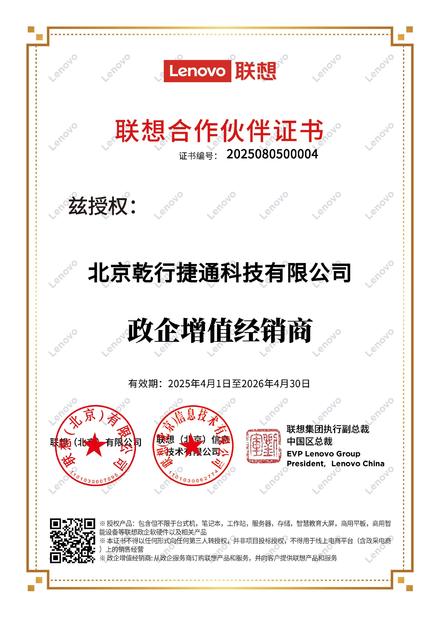
중국 Beijing Qianxing Jietong Technology Co., Ltd. 인증
고객 검토
베이징 첸싱 지에통 테크 주식회사의 영업 사원은 매우 전문적이고 참을성 있습니다. 그들은 빨리 인용을 제공할 수 있습니다. 제품의 품질과 패키징은 또한 매우 좋습니다. 우리의 협력은 매우 매끄럽습니다.

—— 《Festfing DV》LLC

내가 긴급히 인텔 CPU와 토시바 SSD를 찾고 있었늘 때, 베이징 첸싱 지에통 기술 주식회사로부터의 샌디는 나에게 많은 도움을 주었고, 나에게 빨리 필요로 한 제품을 가져다 주었습니다. 나는 정말로 그녀를 압니다.

—— 고양이 엔

베이징 첸싱 지에통 기술 주식회사의 샌디는 내가 서버를 구입할 때 제시간에 나에게 구성 오류를 상기시킬 수 있는 매우 주의깊은 판매원을 있습니다. 엔지니어들은 또한 매우 전문적이고, 빠르게 테스팅 프로세스를 완료할 수 있습니다.

—— 스트렐킨 미하일 블라드미로비치

베이징 첸싱지에통과의 협업에 매우 만족합니다. 제품 품질이 훌륭하고, 배송도 항상 제 시간에 이루어집니다. 영업팀은 전문적이고, 인내심이 많으며, 모든 질문에 매우 친절하게 답변해 줍니다. 그들의 지원에 진심으로 감사드리며, 장기적인 파트너십을 기대합니다. 강력 추천합니다!

—— Ahmad Navid

품질: 제 공급업체와의 좋은 경험. 미크로틱 RB3011은 이미 사용되었지만 매우 좋은 상태로 모든 것이 완벽하게 작동합니다. 통신은 빠르고 원활했습니다.그리고 제 모든 걱정은 빠르게 해결되었습니다.매우 신뢰할 수 있는 공급자

—— 제란 콜레시오

제가 지금 온라인 채팅 해요
회사 뉴스
Dell and data physics

Dell contends single-namespace AI storage architectures clash with enterprise distributed data gravity realities, forcing GPUs to stall waiting for data due to unaddressed architectural limitations.

에 대한 최신 회사 뉴스 Dell and data physics  0

At its core lies a fundamental choice: should data travel to the compute platform, or should the platform go to where data resides? Jon Hyde, Dell Senior Director of Competitive Intelligence, makes the case for federated AI data platforms over centralized storage-integrated stacks across three blog posts.

In his first post, Hyde argues massive datasets carry inherent data gravity that locks them in their original locations—core datacenters, edge sites, sovereign compliance regions, SaaS environments, data warehouses, and business-unit-owned object stores. Dubbed the simplest rule of enterprise AI, his thesis states data stays where it lands, and most will never be relocated.

Numerous enterprise IT frictions block clean unified data architectures: regulatory and sovereignty rules, application lock-in, competing data ownership, contractual and cost barriers, M&A data fragmentation, compliance-locked archives, uncataloged unknown data, and internal organizational silos.

He categorizes data into three distinct forms:
  1. Raw data (heavyweight): Files, records, imagery, video, telemetry, regulated tables. Bulky, slow and costly to move, remaining in situ for tangible operational reasons.
  2. Metadata (descriptive layer): Tags, lineage, schemas, classifications, ownership markers. Lightweight and cheap to replicate, enabling AI visibility into all assets without physical data movement.
  3. Vectors (semantic representation): AI-generated mathematical embeddings, locality-aware and GPU-aligned. They transmit contextual meaning across environments without transporting underlying raw data.

Hyde notes AI does not require raw data movement—only accessible metadata and vectors. A metadata catalog delivers full cross-system asset visibility for AI workloads, while vector indexes power cross-environment semantic reasoning. Restricted, owned, latency-sensitive heavy raw data stays put, governed by its existing operational teams. Vectors feature locality sensitivity and GPU proximity: either raw data migrates to vectorization endpoints, or data is embedded locally before vectors shift to GPU-adjacent infrastructure. This framing underpins his full argument.

Inherently distributed enterprise data splits AI data layer design into two opposing philosophies:
  • Storage-integrated stacks (exemplified by VAST AI OS): Built around centralizing large datasets within a vendor-controlled unified namespace, tightly coupling embedded AI services for streamlined operations. This model assumes data will migrate to the platform to justify consolidation, and works well for greenfield AI deployments.
  • Federated AI data platforms (Dell’s framework): Designed around the premise that enterprise data remains permanently distributed, requiring the platform to operate alongside data’s native locations. Dell’s AI Data Platform combines PowerScale and ObjectScale with a federated control plane to access and process data across file systems, object storage, warehouses, SaaS tools and public clouds—no mandatory centralized data copies. It treats raw data, metadata and vectors as separate first-class entities, governs all three consistently, and leverages lightweight metadata and vectors to deliver value while heavy raw data stays in place.

Hyde’s second blog critiques storage-integrated architectures like VAST AI OS for ignoring distributed enterprise data realities. These stacks operate on one rigid premise: all AI processing runs exclusively on data ingested into their proprietary namespace, rendering external data invisible to the platform. Vendors supply migration tooling, market consolidation as an operational simplifier, and unified UIs that mask fragmented real-world data landscapes during demos.

Architectures lumping raw data, metadata and vectors into a single monolithic category default to the flawed mandate of mass data migration. Frameworks that differentiate the three layers leave regulated heavy data governed locally, replicate metadata enterprise-wide, and use vectors for cross-environment AI reasoning. A unified namespace only works if raw data is the sole considered asset; it becomes ineffective once metadata and vectors are recognized as independent core components.

Dell’s federated architecture operates on three core principles:
  • Raw data remains in its native location under existing governance teams
  • Metadata replicates globally, granting all AI workloads full cross-location asset visibility
  • Vectors carry semantic context across the environment, enabling AI reasoning without raw data relocation

Hyde’s third post proves Dell’s federated design outperforms VAST’s storage-integrated stack in feeding data to GPUs. Dell released side-by-side October 2025 testing on vector KV cache offloading workloads using the Qwen3-32B model, drawing on internal Dell benchmarks and public VAST disclosures:
  • PowerScale: 0.82s Time to First Token (TTFT)
  • ObjectScale: 0.86s TTFT
  • VAST: 1.5s TTFT
  • Baseline vLLM without KV cache offloading: 11.8s TTFT

He states architectures built around GPU delivery—treating raw data as gravity-bound and portable semantic vectors as the transportable layer—amplify Dell’s performance edge with every inference request. Designs dependent on ingesting raw data into a proprietary namespace suffer structural inherent delays.

Hyde acknowledges VAST has published updated KV cache offloading results, most notably December 2025 benchmarks with Nvidia Dynamo and CoreWeave citing ~20x faster TTFT vs recompute and 90% higher GPU efficiency. However, these tests use distinct workloads and baselines, with no matching Qwen3-32B head-to-head beating the published 1.5s VAST TTFT figure.

He urges enterprises selecting GPU-targeted data architectures to pose a critical question: “What GPU utilization will this platform deliver on realistic inference workloads with KV cache offloading, against mixed datasets including regulated, sovereign and application-locked sources?”

This query forces vendors to address fundamental structural tradeoffs, explain performance limitations when data cannot be ingested into their namespaces, publish reproducible TTFT, tokens-per-second and cache hit rate metrics on modern open-source models with full methodology, and honestly answer the pivotal financial concern: how much GPU idle time does this architecture create?

Commentary

Vectorized datasets vastly outsize their source raw data. Embeddings often multiply original source volume 3–20x or more per record, varying by text chunk size, embedding dimensionality and storage formats. Source datasets are split into discrete chunks (paragraphs, fixed token windows) pre-embedding for superior retrieval accuracy. A standard text chunk of 250–500 words equates to roughly 0.5–2KB raw text, with its corresponding vector frequently 3–10x larger.

Key unresolved question: Where does vectorization take place, and are oversized vector datasets relocated if generated far from GPUs? Their substantial bulk creates its own data gravity. Teams either shift raw data to embedding infrastructure or move full vector sets to AI compute, battling data gravity in both scenarios. We have flagged this contradiction to Jon Hyde for further clarification.

Beijing Qianxing Jietong Technology Co., Ltd.
Sandy Yang/Global Strategy Director
WhatsApp / WeChat: +86 13426366826
Email: yangyd@qianxingdata.com
Website: www.qianxingdata.com/www.storagesserver.com
Business Focus:
ICT Product Distribution/System Integration & Services/Infrastructure Solutions
With 20+ years of IT distribution experience, we partner with leading global brands to deliver reliable products and professional services.
“Using Technology to Build an Intelligent World”Your Trusted ICT Product Service Provider!

선술집 시간 : 2026-06-23 13:54:14 >> 뉴스 명부
연락처 세부 사항
Beijing Qianxing Jietong Technology Co., Ltd.

담당자: Ms. Sandy Yang

전화 번호: 13426366826

회사에 직접 문의 보내기 (0 / 3000)